
Introduction: The Global Phenomenon—Why Lee Jung-jae Remains Irreplaceable
The cultural capital of Korean television dramas (K-Dramas) on the global stage achieves unprecedented milestones year after year. At the absolute vanguard of this cultural paradigm shift stands Netflix’s most monumental historical success, [Squid Game]. This series transcended mere commercial triumph; it functioned as a razor-sharp sociological critique of modern capitalism, igniting profound cross-cultural discourse worldwide. The definitive locomotive that propelled this global syndrome was, without question, the transcendent performance of actor Lee Jung-jae in the role of Seong Gi-hun.
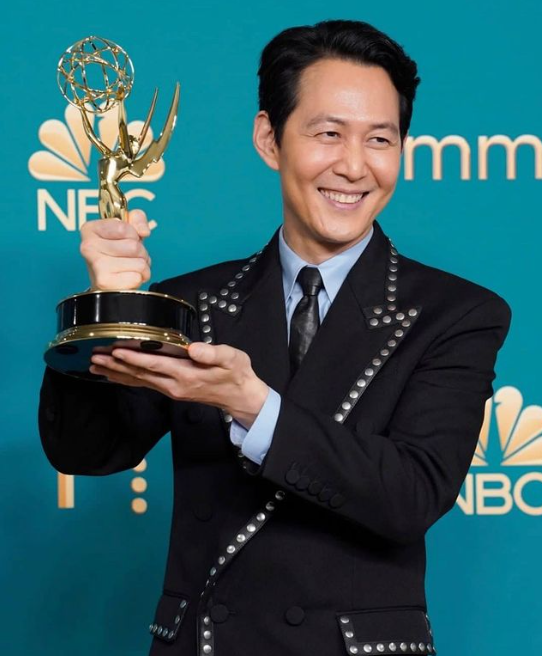
Frankly, when the casting rumors first dropped, I remember scratching my head thinking, “Wait, THE Lee Jung-jae is playing a pathetic, deadbeat broke guy?” It was hard to picture back then. For decades, Lee Jung-jae was canonized in the public consciousness as the definitive symbol of sophisticated, urban masculine elegance. When he completely dismantled that legacy to embody a haggard, desperate individual at the absolute nadir of human existence, both audiences and critics surrendered to unanimous adulation. Through this seminal performance, Lee Jung-jae became the first Asian performer to secure the Primetime Emmy Award for Outstanding Lead Actor in a Drama Series, officially elevating him to the echelon of undisputed global masters. This column provides an exhaustive, multi-dimensional analysis of Lee Jung-jae’s career architecture, his precise character execution in [Squid Game], and the limitless contours of his acting spectrum.
Biography: From Icon of Youth Culture to an Indomitable Titan of Method Acting
The genesis of Lee Jung-jae’s career deviates sharply from traditional paths to stardom. In the early 1990s, while working a routine part-time job at a local café in the affluent district of Apgujeong-dong, his striking physical presence caught the eye of the legendary fashion designer Ha Yong-soo. He was immediately thrust into the elite fashion industry as a high-profile runway model before formally transitioning into television via the 1993 drama [Dinosaur Teacher].
The definitive cultural flashpoint that permanently etched his name into the national consciousness was the 1995 SBS masterpiece [Sandglass], a cultural phenomenon that fundamentally paralyzed South Korean society during its broadcast hours. Lately, as retro K-dramas trend across Threads and online blogs, clips of Lee from this era are going viral again. Looking at them, you can’t help but think, “Even back then, his face alone was the entire plot and rationale of the show.” Portraying ‘Baek Jae-hee’—the silent, stoic bodyguard devoted to protecting the female protagonist—Lee Jung-jae achieved near-religious popularity despite having minimal spoken dialogue. He communicated entirely through a piercing, nuanced gaze and highly disciplined physicality, instantly transforming into the ultimate poster child of 1990s youth culture.
Crucially, Lee Jung-jae refused to commodify his status as a conventional idol. While many contemporary starlets found themselves permanently incarcerated within their early typecasted roles, he deliberately sought artistic reinvention. His visceral portrayals of fractured, wandering youth in cinematic landmarks like [The Young Man] and [City of the Rising Sun] laid the foundation for a profound artistic evolution. As he aged, he seamlessly traded superficial youth appeal for profound psychological depth, executing a masterful transition into an elite character actor.
Character Analysis: Dismantling the Ego—The Meticulous Subversion of Seong Gi-hun in [Squid Game]
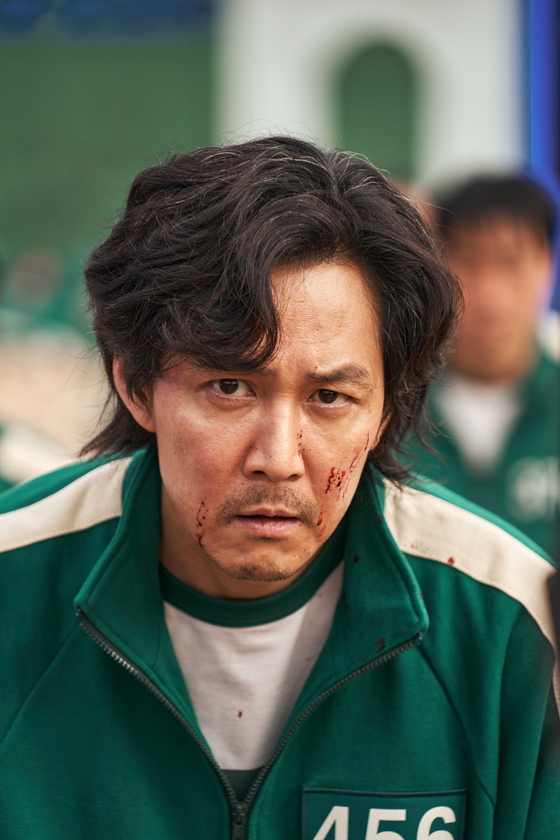
In the narrative universe of [Squid Game], the character of Seong Gi-hun represents a total systematic collapse: a victim of corporate restructuring, a failed divorcee, a chronic debtor, and a gambling addict. As netized comments widely agree across online communities, “In this series, Lee Jung-jae didn’t just sacrifice his good looks; he completely threw them to the floor and stomped on them for the sake of acting.” Every vestige of the charismatic, impeccably styled star the public had revered for decades was entirely obliterated. In his place stood an individual wearing tattered clothes and sporting unkempt hair—the quintessential portrait of an incompetent provider. Lee Jung-jae made the highly strategic, fearless artistic decision to entirely strip away his inherent physical advantages to honor the emotional reality of the text.
The profound complexity of Seong Gi-hun lies within the precarious equilibrium between ‘absolute survivalist selfishness’ and ‘the residual embers of human empathy.’ Within a dystopian arena where a staggering 45.6 billion won bounty demands total moral compromise, Lee Jung-jae brilliantly articulated the fundamental fragility and nobility of the human condition. He portrayed a man who fights with primitive savagery to survive, yet fundamentally refuses to abandon his core empathy for his fellow human beings in ultimate moments of crisis.
His micro-expression work and the subtle tremors of his facial muscles during high-stakes sequences were nothing short of revelatory. Personally, the moment that gave me the biggest chills was the comical Dalgona-licking scene. While it birthed endless memes across social media, it wasn’t just funny—you could feel the raw, desperate obsession of a man stripping away all his dignity just to survive. It left a bittersweet aftertaste behind the laugh. The sequence where he frantically licks the back of a Dalgona candy masterfully balanced absurdist humor with sheer, unadulterated terror, evoking simultaneous amusement and profound tension from global audiences. Conversely, his vacant, hollow gaze during the final confrontation with Sang-woo, or when confronting the devastating truth regarding the old man Il-nam, communicated a haunting commentary on how unregulated capitalism systematically erodes human dignity. His vocal delivery—devoid of theatrical exaggeration yet scraping the absolute bottom of emotional despair—served as the structural anchor of the entire series.
Filmography: A Chameleon Without Borders—Analyzing a Boundless Dramatic Spectrum
The true metric of Lee Jung-jae’s artistic caliber is found in the panoramic diversity of his filmography. Recently, YouTube and Netflix comment sections have been flooded with reactions like, “My brain short-circuited while binge-watching Lee Jung-jae’s filmography,” simply because his characters in each project are so radically opposite. He belongs to an exceedingly rare cadre of global actors capable of migrating effortlessly between protagonist and antagonist, period epics and ultra-modern noir, commercial blockbusters and cerebral art-house cinema. A deep dive into the major creative turning points of his cinematic journey illustrates this profound versatility:
The Thieves (2012) – The Role of Popeye
In Choi Dong-hoon’s high-octane heist masterpiece [The Thieves], Lee Jung-jae masterfully crafted ‘Popeye,’ a duplicitous, vanity-driven criminal. He brilliantly captured the intrinsic pettiness of a man desperate to appear elite, yet ultimately willing to sabotage his closest compatriots for immediate personal gain. This performance was critical because it broke the mold of his traditional handsome archetype, injecting a rich element of tragicomic human weakness into the narrative.
The Face Reader (2013) – The Role of Grand Prince Suyang
Widely celebrated in East Asian cinema as one of the most electrifying character introductions in film history, his portrayal of Grand Prince Suyang remains the absolute zenith of cinematic charisma. Lee Jung-jae weaponized an overwhelming screen presence to manifest an individual driven by predatory, wolf-like ambition and an insatiable lust for the throne. His chilling line, “Do I have the face of a man who would be king?” sparked endless cultural parodies and solidified the character as an immortal cinematic icon.
Assassination (2015) – The Role of Yeom Seok-jin
Portraying the dual-faceted resistance fighter ‘Yeom Seok-jin,’ Lee Jung-jae meticulously charted the agonizing psychological degradation of a man navigating the timeline between youth and old age. He beautifully mapped the terror and pathological self-justification of a freedom fighter who devolves into a treacherous informant. For the climatic courtroom sequence featuring the character as an old man, Lee Jung-jae underwent an intense physical regimen, losing over 15 kilograms to achieve a visceral, haunting realism that earned unanimous critical acclaim.
Through this relentless methodology, Lee Jung-jae has systematically eviscerated his own creative precedents with every subsequent project, cementing an entirely irreplaceable domain within global cinema.
Conclusion: Cultural Ambassador to the World—The Future Legacy of an Icon
Today, global audiences and academic critics view Lee Jung-jae through a lens that extends far beyond the definition of a mere ‘celebrity actor.’ He is widely recognized as a premier cultural ambassador actively expanding the frontiers of K-Content. Across international digital communities, foreign cinephiles are aggressively cataloging and revisiting his extensive retro filmography, expressing profound awe at the sheer depth of his artistic journey. Seeing how he consistently renews his prime years without any major controversies, fans praise him as “the textbook definition of a long-running actor” and “a true adult who grows cooler with age.” Domestically, the public rewards him with absolute institutional trust, a byproduct of a career spent entirely devoid of controversy, dedicated strictly to the rigorous refinement of his craft over several decades.
Having conquered the absolute summit of performance art, he recently demonstrated his directorial acumen with the critically acclaimed espionage thriller [The Hunt], proving his narrative vision behind the camera. Furthermore, his seamless integration into the mainstream Hollywood ecosystem as a revered Jedi Master in the Star Wars franchise series [The Acolyte] demonstrates his universal appeal across diverse global demographics.
Moving forward, the trajectory of Lee Jung-jae will undoubtedly serve as the primary compass expanding the horizons of the Korean entertainment industry. Rather than experiencing a contraction of his artistic spectrum with age, his creative footprint is actively accelerating outward into the global mainstream. His life’s work stands as an inspiring blueprint for successive generations of artists. We await his future transformations with profound anticipation, confident in his ability to once again destabilize and redefine the boundaries of global visual storytelling.
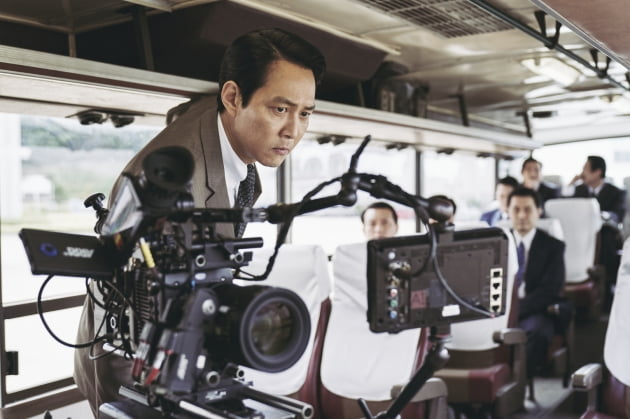
We await his future transformations with profound anticipation, confident in his ability to once again destabilize and redefine the boundaries of global visual storytelling.
Next Up for You: Explore the architectural blueprint of the masterpiece that secured Lee Jung-jae his historic Emmy win. Dive deep into the hidden metaphors and social commentary in our exclusive article, [Netflix’s Squid Game Review: Decoding the Metaphors and Human Cruelty].
We Value Your Perspective
What is your definitive assessment of Lee Jung-jae’s profound cinematic universe? Which performance in his illustrious career resonated with you most deeply? Please share your analytical insights in the comments section below. We will continue to deliver high-density, authoritative cultural and cinematic analysis. If this content added value to your day, please subscribe and like to support our independent publishing. Which performance in his illustrious career gave you the biggest goosebumps or stands out as your ultimate favorite? Please share your analytical insights in the comments section below!