
Hello to all K-drama fans around the world!
Today, we are diving deep into a masterpiece that needs no introduction—a global phenomenon that rewrote the history of television. Yes, we are talking about Squid Game (Season 1). Let’s explore why this series captured the hearts of millions, the authentic Korean culture embedded in it, and some useful Korean expressions you can learn today!
‘Squid Game Season 1’ Official Info & Dynamic Character Relations
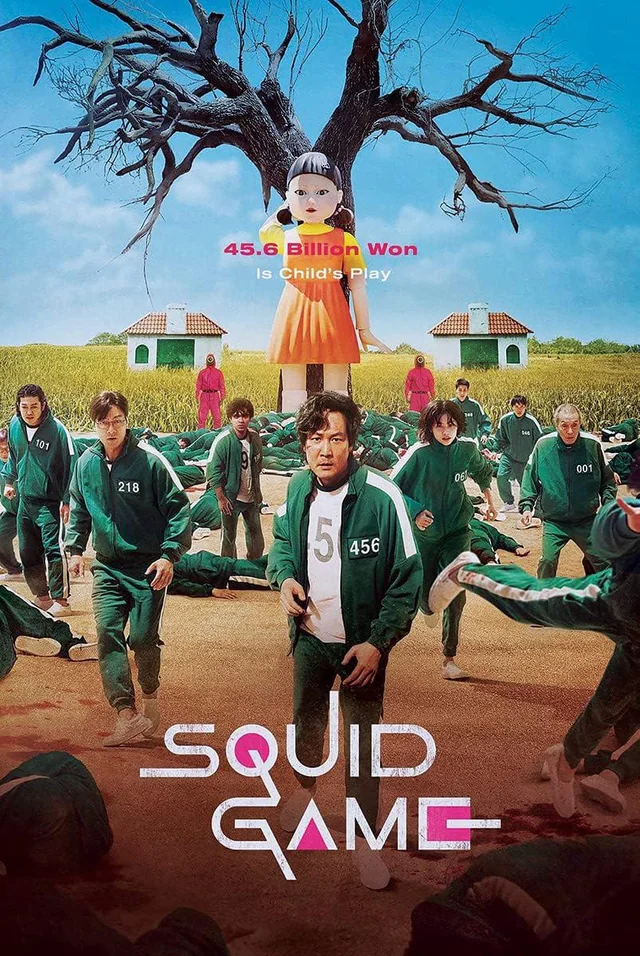
Before we dive into the analysis, let’s look at the essential information and character dynamics. Understanding these relationships beforehand will make your viewing experience much richer and easier to follow.
Basic Show Information
- Streaming Platform: Available exclusively on Netflix
- Episodes: 9 episodes (The perfect length for a weekend binge!)
- Genre: Survival, Thriller, Suspense, Social Commentary
- Main Synopsis: 456 cash-strapped contestants from all walks of life accept a mysterious invitation to compete in children’s games. With a massive 45.6 billion won prize on the line, they quickly realize that losing a game means losing their lives.
Understanding Korean Emotional Culture: The Meaning of “Jeong (정)”
One of the reasons Squid Game creates such a strong emotional impact is connected to the Korean concept of “Jeong (정).” Jeong refers to a deep emotional connection that develops through shared experiences, time, and mutual care. Unlike a simple friendship, it describes a bond that grows naturally through relationships and memories.
Throughout the series, characters who begin as strangers slowly develop emotional connections despite being trapped in a life-or-death situation. The relationship between Gi-hun and the other contestants reflects this unique Korean perspective that human bonds can exist even in extreme circumstances.
Key Characters & Relationships
The reason this show resonated so deeply with global audiences isn’t just the deadly games—it is the raw, human, and multi-dimensional characters.
- Seong Gi-hun (Played by Lee Jung-jae): A man hitting rock bottom due to restructuring, debt, and gambling. Despite the extreme environment, he is a warm-hearted character who struggles to hold onto his humanity and trust in others.
- Cho Sang-woo (Played by Park Hae-soo): Gi-hun’s childhood friend and a gifted graduate from the prestigious Seoul National University. However, he faces immense debt due to bad investments. Rational and calculated, his pragmatic approach to survival serves as a sharp contrast to Gi-hun’s emotional nature.
- Kang Sae-byeok (Played by Jung Ho-yeon): A North Korean defector who needs the prize money to rescue her family. She starts as a cold, guarded survivalist who trusts no one, but gradually opens her heart after forming connections with Gi-hun and Ji-yeong.
- Oh Il-nam (Played by Oh Young-soo): An elderly man with a brain tumor who enjoys the games with childlike innocence. He forms a touching bond with Gi-hun, becoming his ‘Kkanbu’.
Global Sensation! 4 Key Themes That Captivated the World

Why did Squid Game break cultural and language barriers so effortlessly? Here are four core elements analyzed from a cultural perspective.
A Human Drama Filled with Korean ‘Jeong (정)’ and ‘Han (한)’
While Western survival stories often focus strictly on gore, action, or puzzle-solving, Squid Game focuses heavily on the characters’ desperate realities and emotions. It beautifully weaves in the traditional Korean sentiments of Jeong (deep affection and bonding) and Han (a collective feeling of sorrow, injustice, and resilience). The human warmth blooming even when forced to betray one another is what brought tears to global audiences.
The Korean Social Context Behind Squid Game
Beyond its thrilling survival elements, Squid Game reflects real social concerns in modern Korea, including economic inequality, debt, competition, and pressure to succeed. The characters are not simply fighting for money; they represent ordinary people facing difficult choices in a highly competitive society.
This social realism is one reason why viewers around the world could connect with the story despite cultural differences.
Fairytale Visuals Contrasted with Brutal Realities
The set designs are reminiscent of gigantic playgrounds or fairytale books. The pink-suited masked guards, the pastel-toned maze stairs, and the giant Young-hee doll create a vibrant, aesthetic visual landscape. This stark contrast between beautiful childhood innocence and brutal, gory survival matches perfectly to deliver a high-concept visual thrill.
A Hauntingly Perfect Soundtrack
Music director Jung Jae-il brilliantly crafted a score using uncanny recorder melodies and rhythmic drum beats. These catchy yet unsettling tunes maximize the suspense, making it impossible for viewers to look away from the screen for even a single second.
Deep Dive into K-Culture & Real Korean Expressions

The best part of watching K-dramas is learning about authentic Korean mindsets and practicing useful conversational phrases!
K-Culture Spotlight: The ‘Kkanbu (깐부)’ Culture
The most crucial keyword in the entire series is “Kkanbu.” Historically, when Korean children played neighborhood games like marbles or ddagji, they would cross their pinky fingers and declare themselves Kkanbu. This meant they became ultimate partners who shared everything—marbles, risks, and victories—with no distinction between “yours” and “mine.”
It goes far beyond the standard English word “friend.” It represents a bond of absolute trust where betrayal is not an option. It perfectly mirrors how deeply Koreans value community and loyalty in close relationships.
Real Korean Phrase: “우리는 깐부잖아.”
This is the iconic line delivered by Oh Il-nam to Seong Gi-hun, which broke the hearts of millions. You can use this phrase in real life with someone you consider a true, inseparable friend.
- Korean: “우리는 깐부잖아.”
- Romanization: [U-ri-neun kkan-bu-ja-na]
- English Meaning: “We are kkanbu, you know.” / “We are partners, remember?”
- How to use: This phrase combines Uri (We), Kkanbu, and the grammatical suffix -잖아 (which implies “as you know” or “since it’s true”). If you want to tell a close friend, “There are no secrets between us, we always have each other’s backs,” say this phrase with a warm smile!
Conclusion: What Are Your Thoughts?
Squid Game Season 1 is more than just an entertaining thriller; it is a profound critique of modern capitalistic competition and human nature. Honestly, browsing through online communities like Reddit, I noticed so many fans asking the exact same question I had: What did you think about the choices Seong Gi-hun made in the final episode? That ending scene at the airport literally gave me goosebumps, but it also left me shouting at the screen, wondering why he didn’t just get on the plane to see his daughter. If you were offered a spot in a game worth 45.6 billion won, would you join, or would you run the other way?
Feel free to leave your thoughts, theories, and comments below! Let’s chat and practice your Korean skills together. Stay tuned for more high-quality K-drama insights in my next post!
Recommended Read: Fascinated by the Emmy-winning performance that led this global phenomenon? Dive deep into his boundless dramatic spectrum, from legendary villain roles to his Hollywood debut, in our exclusive column: [The Architecture of K-Content: Analyzing the Narrative and Cinematic Mastery of Actor Lee Jung-jae].