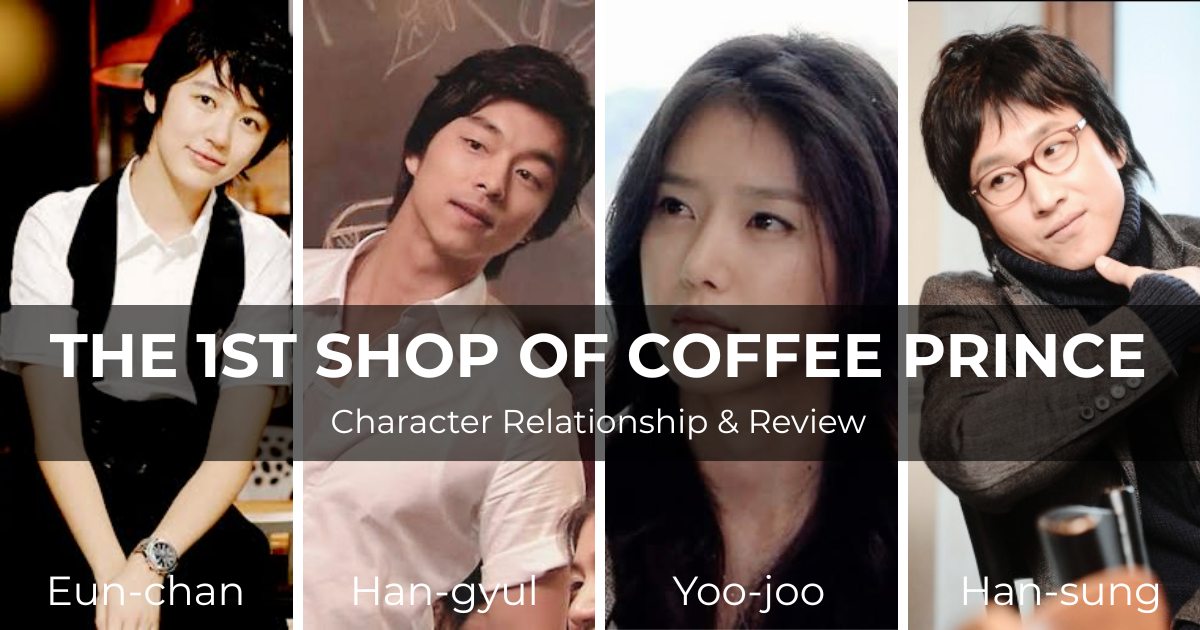

Our Coffee Prince review explores the iconic gender-bender story, beautiful summer aesthetics, and complex character dynamics.
Welcome back, global K-drama lovers! In this comprehensive The 1st Shop of Coffee Prince Review, we bring you your ultimate spot for everything trending and profound in the world of Korean media.
Today, we are diving deep into a legendary masterpiece that continues to make hearts flutter every single summer: <The 1st Shop of Coffee Prince>. Beyond a simple romantic comedy, this series beautifully captures the raw anxieties of youth, the pains of personal growth, and the true value of love that transcends gender and social prejudice. Let us break down exactly why this iconic show remains an absolute must-watch for international audiences and a permanent resident on many “all-time favorite” lists.
Official Information and Complex Character Dynamics
To truly appreciate the depth of this drama, we must first look at its basic official information and the beautifully layered character relationships that drive the narrative. The emotional progression of each individual is crafted with incredible precision.
- Episodes: 17 Episodes (16 Original + 1 Extension)
- Streaming Platforms: Wavve, Watcha, Netflix (Availability varies by region)
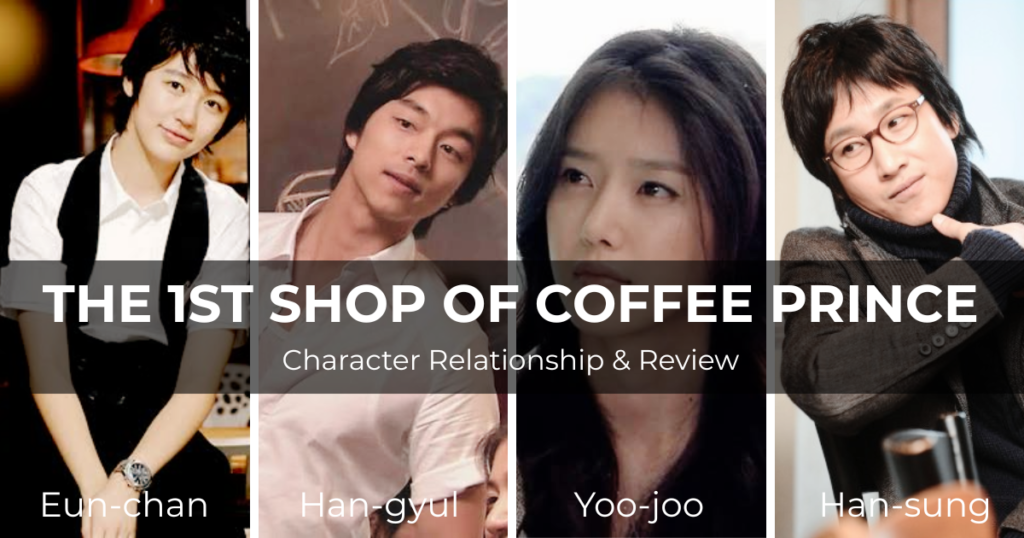
Go Eun-chan (Played by Yoon Eun-hye)
A fiercely hardworking 24-year-old breadwinner who takes on any job that pays—from Taekwondo instructor and food delivery to sewing doll eyes. After losing her father early in life, she shoulders the financial responsibility for her mother and younger sister. Because of her short haircut, boyish style, and blunt speech, she is constantly mistaken for a man. Desperate for income, she disguises herself as a boy to secure a job at ‘Coffee Prince,’ a cafe that strictly hires male employees.
Choi Han-gyul (Played by Gong Yoo)
A brilliant but fiercely independent third-generation chaebol heir who despises being controlled. Pressured by his grandmother to participate in arranged blind dates, he accidentally crosses paths with Eun-chan and hires “him” to act as his gay lover to ruin the dates. Later, he is tasked with running a failing coffee shop, transforming it into ‘The 1st Shop of Coffee Prince.’ In the process, he finds himself deeply shaken by his growing feelings for Eun-chan, whom he still believes to be a man, plunging into a profound identity crisis.
Choi Han-sung (Played by Lee Sun-kyun)
Choi Han-gyul’s cousin and a prominent broadcast music director with a famously deep, captivating voice. Attracted to Eun-chan’s bright and pure nature, he becomes a supportive, comforting presence in her life. However, he harbors deep, unresolved emotional wounds from his past, specifically from when his long-time love, Han Yoo-joo, left him for another man.
Han Yoo-joo (Played by Chae Jung-an)
A highly talented painter with a fiery, free-spirited personality. She is Han-sung’s former flame and Han-gyul’s long-time first love. After leaving Han-sung to pursue her artistic career abroad, she returns to Korea upon realizing his irreplaceable value, creating a subtle, high-stakes emotional tension among the four leads.
Key Viewpoints Captivating Global Audiences
The enduring legacy of <The 1st Shop of Coffee Prince> rests on several masterfully executed production and narrative elements that perfectly align with global viewer preferences.
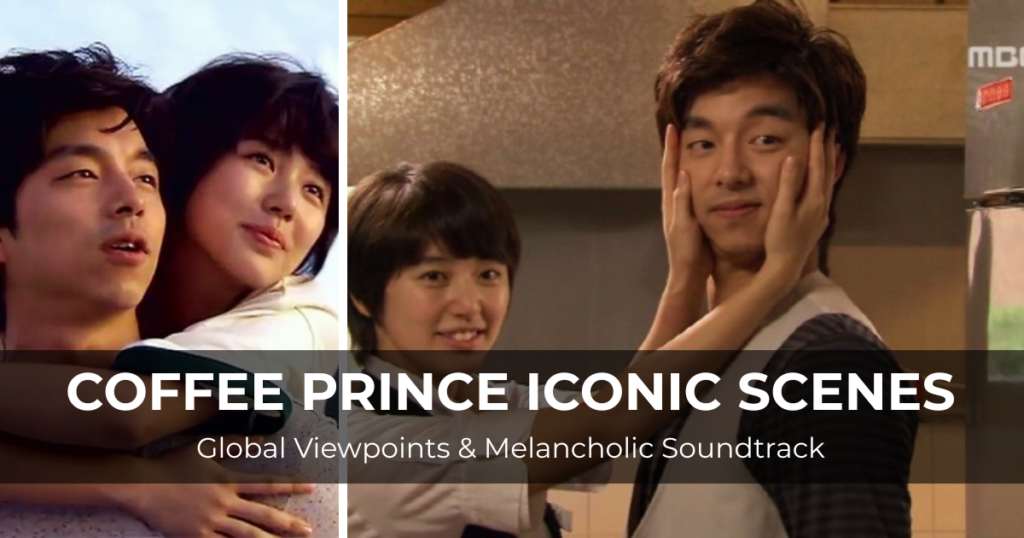
The Thrilling Tension of the “Gender-Bender” Trope
While the “girl-disguised-as-a-boy” trope is a staple in television, this series handles it with unparalleled emotional gravity. The internal torment Han-gyul experiences as he falls uncontrollably in love with someone he believes to be male offers global audiences a profound exploration of identity. The climax of this emotional struggle, where Han-gyul delivers the iconic line, “I don’t care if you’re a man or an alien anymore,” remains one of the most celebrated confession scenes in K-drama history.
Sensational Directing and a Living Summer Aesthetic
This series made history as one of the major prime-time Korean dramas helmed by a female director, PD Hwang In-hyuk (co-directed with Lee Yoon-jung). The directing captures the vibrant, lush green hues of summer, the warm steam rising from freshly brewed espresso, and the microscopic shifts in the characters’ expressions with a cinematic touch. The season of summer itself acts as a vital character, mirroring the raw passion and lingering nostalgia of youth.
A Cult-Classic, Emotion-Driven OST
The music of this drama completely revolutionized K-drama soundtracks by heavily integrating indie music. From Lee Sun-kyun’s melancholic rendition of ‘Ocean Travel’ to Tearliner’s ‘Love Is Weaken When It Looks About Time’ and The Melody’s ‘Lalala, It’s Love!’, the soundtrack crafts a uniquely indie, sentimental atmosphere. Decades later, simply hearing these tracks instantly evokes the bittersweet scent of a midsummer romance.
Cultural Deep Dive: Real Korean Lifestyle
For international readers, the most fascinating aspect of watching a K-drama is catching a glimpse into the genuine, everyday lifestyle of Korean society. This drama perfectly encapsulates an iconic element of local domestic life.
K-Culture Insight: The “Yangpun Bibimbap” and the Essence of ‘Jeong’
Throughout the drama, you will frequently see Eun-chan’s family or the cafe staff throwing leftover rice, assorted side dishes, a generous dollop of Gochujang (red chili paste), and a drizzle of sesame oil into a massive metal basin (Yangpun). They then sit in a circle, armed with multiple spoons, mixing and eating directly from the same bowl.
This scene perfectly illustrates ‘Jeong (정)’—the foundational Korean cultural concept of deep emotional bonding, affection, and collective empathy. Rather than dividing food into individual portions, sharing a single, giant bowl signifies the breaking down of personal boundaries. It is a powerful cultural expression that says, “We are a family, and we share everything.” For global viewers, witnessing this unpretentious, messy, and communal way of dining offers a window into the warm, authentic hospitality of real Korean relationships.
Final Thoughts
Even as we sit decades past its original broadcast, the youthful, sun-kissed energy of <The 1st Shop of Coffee Prince> remains completely untarnished. It stands the test of time because it refuses to treat its central premise as a cheap gimmick; instead, it focuses on the beautiful, raw process of learning to love the absolute essence of a human being.
Which scene or quote from this legendary drama made your heart race the most? How did you feel about Eun-chan’s difficult choice to hide her identity for the sake of her family? Let us know your thoughts and share your favorite summer drama memories in the comments below! Don’t forget to subscribe to K-VerseHub for more deep, high-quality features on your favorite series.