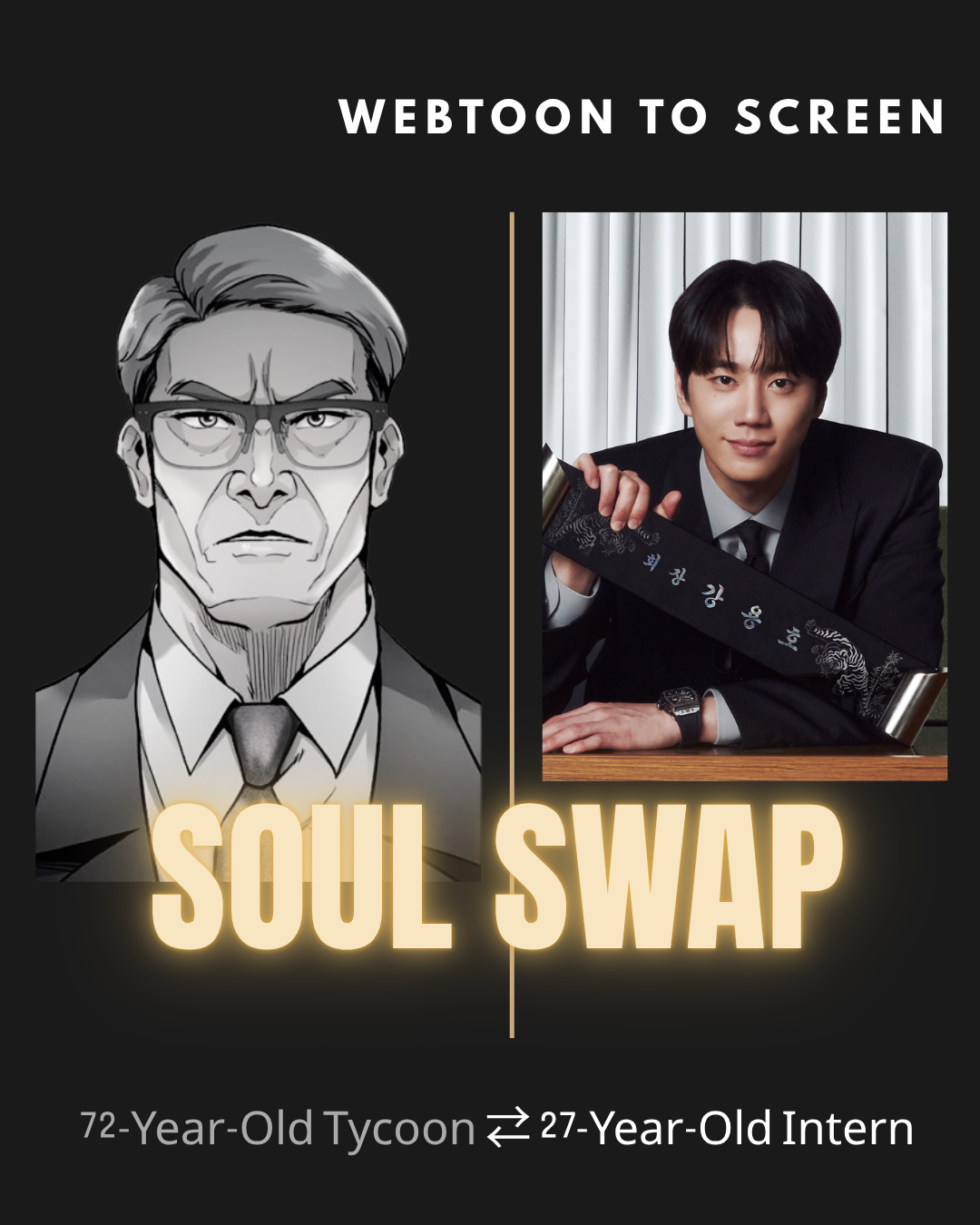

Hey everyone! Have you noticed this drama suddenly dominating your feed lately? JTBC’s newly premiered weekend series, Corporate Exorcism: Chairman Kang, is quickly becoming a hot topic among K-drama fans.
At first glance, it looks like just another predictable chaebol body-swap story. But it quickly proves to be something much more layered. Instead of relying on familiar tropes, the series develops into a tightly structured corporate thriller that combines identity conflict, family power struggles, and workplace politics in a surprisingly engaging way.
The Ultimate Culture Clash: 72-Year-Old Tycoon Meets Gen-Z Intern
The premise alone delivers a high-stakes corporate drama built around an unexpected body-swap scenario. Kang Yong-ho (played by Son Hyun-joo), the 72-year-old founder of the multi-billion-dollar Choesung Group, falls into a coma after a suspicious incident linked to internal family conflict. When he wakes up, he discovers that he is now living in the body of Hwang Jun-hyeon (played by Lee Jun-young), a 27-year-old entry-level intern in the company’s materials department with no financial stability, no connections, and a failed athletic career behind him.
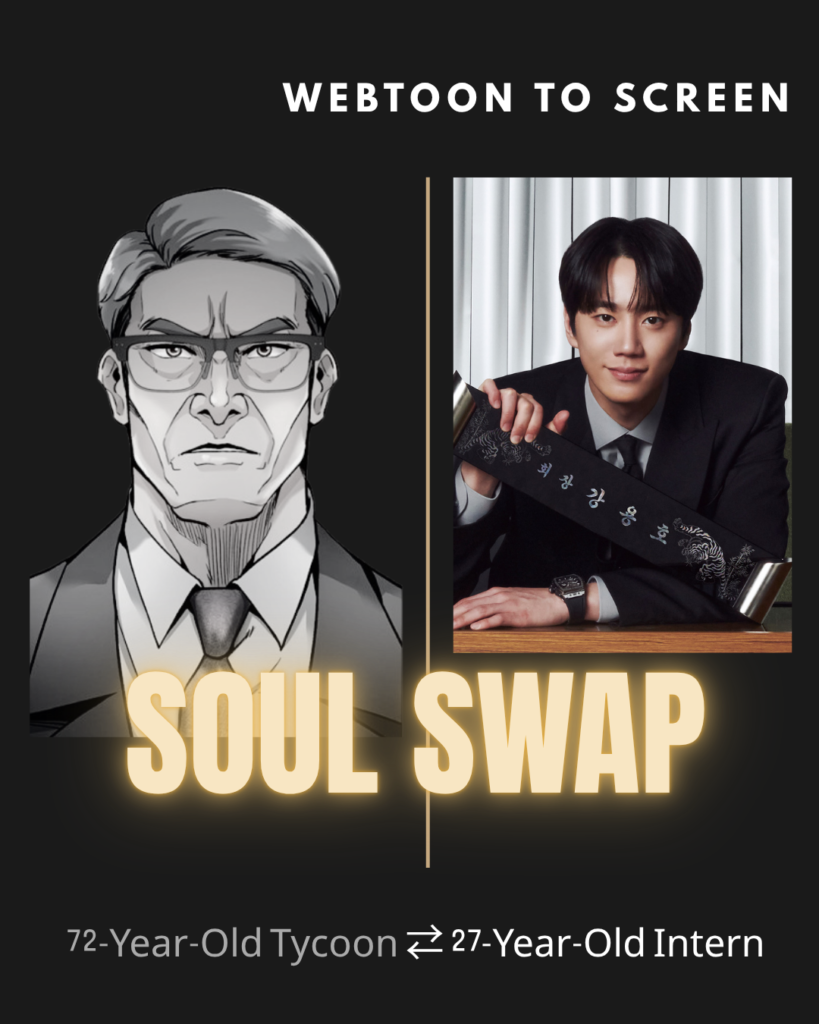
Here is the central hook of the series: while most body-swap stories lean into light, comedic, and often slapstick situations, this drama takes a very different approach. Instead of humor-driven chaos, it frames the swap with a serious psychological tone, emphasizing the stark divide between generations and social classes from the very beginning.
Ruthless Corporate Schemes vs. Pure Intellectual Brilliance
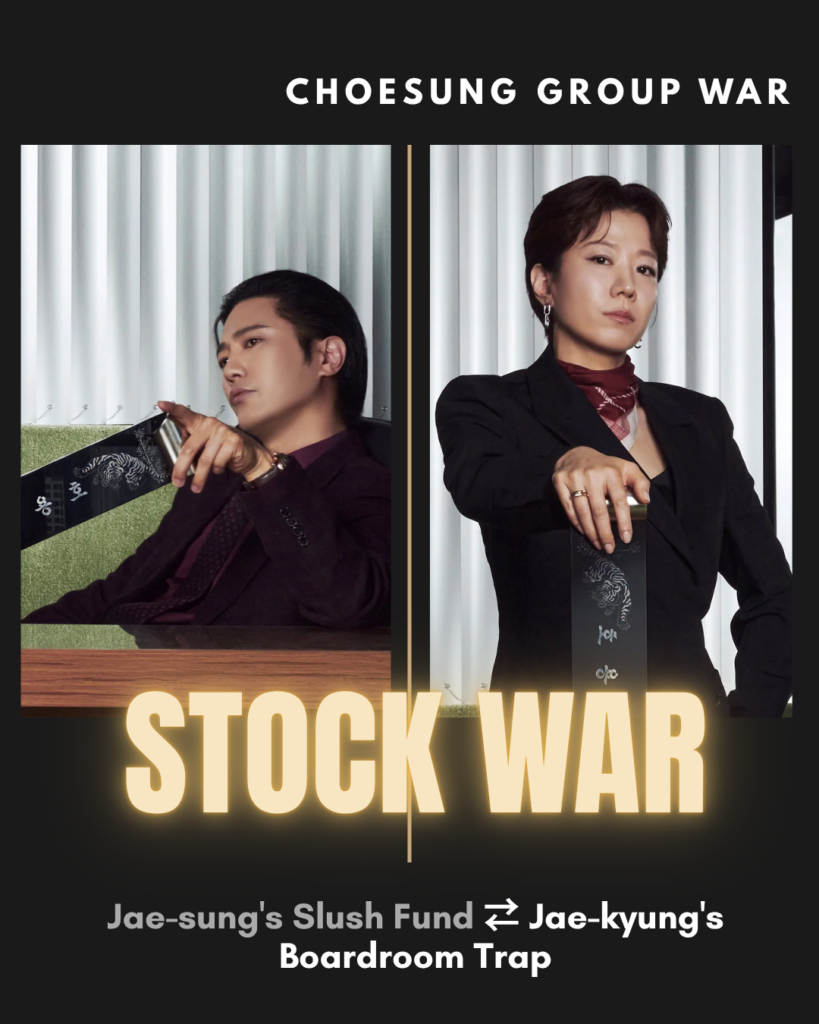
This series stands out for its detailed and layered depiction of corporate systems and shareholder power dynamics, making it feel like a case study in modern conglomerate politics. Once the chairman falls into a coma, his children immediately ignite a ruthless succession battle, unfolding through highly calculated financial and strategic moves:
Kang Jae-sung’s Offshore Fund Strategy: With strong backing from his father-in-law, Chairman Na Byung-mo, Jae-sung leverages Choesung Group’s offshore shell structures to carry out a reverse share buyback scheme.
Through this maneuver, he is able to quietly redirect internal funds and strengthen his position in the succession battle.
Kang Jae-kyung’s Alliance Strategy & Corporate Restructuring: As the head of the chemical division, Jae-kyung strategically aligns herself with the family matriarch, Cho Sun-hee, to consolidate internal support.
She then proposes an aggressive corporate restructuring plan designed to outmaneuver both executives and board members, while establishing a new Strategic Planning Team to reinforce her influence within the company.
Instead of relying on convenient plot devices or predictable narrative shortcuts, the drama maintains a grounded and tightly constructed sense of realism. Based on the original web novel by San Kyeong, the story emphasizes strategic thinking and institutional knowledge over spectacle. From his position as a low-level intern, the chairman gradually adapts to his new reality, using his decades of experience to identify weaknesses in internal audit systems and respond to shifting market conditions. Through careful, calculated decisions within the limits of corporate structure, he begins to challenge those who have betrayed him, turning the workplace itself into a battlefield of strategy and control.
Watching this broadcast over the weekend was just one chills-inducing moment after another. Over on Naver Talk and various K-blogs, the viewer consensus is absolutely reeling: “It’s a San Kyeong piece, so every single line of dialogue carries so much weight,” and “Watching him completely dismantle the corrupt board of directors with just his words while stuck in a low-level intern’s body is pure catharsis.” I initially thought it would be just another cliché body-swap, but it honestly feels like a high-tier political thriller. My weekend dopamine was off the charts.
Global Fans Raving Over Lee Jun-young’s Insane ‘Old-Man’ Performance
Bringing this complex psychological conflict to life on screen requires a demanding performance, and Lee Jun-young delivers exactly that. Within the K-drama community, viewers have widely praised his portrayal, noting how convincingly he captures the demeanor and presence associated with Son Hyun-joo’s character. The level of detail in his performance—from speech patterns to subtle behavioral shifts—adds an additional layer of realism to the character transformation:
Voice and Speech Cadence: To convey the authority and grounded presence of a seasoned tycoon, Lee Jun-young reportedly studied Son Hyun-joo’s previous works in detail, focusing on his tone, pacing, and delivery. The contrast between a youthful face and a deep, controlled, mature-sounding voice adds a striking layer of immersion to the performance.
Mannerisms and Subtle Behavioral Details: Lee also incorporates small but distinctive habits associated with the character’s older identity, including conversational rhythms, understated gestures, and restrained physical movements. These subtle choices help maintain consistency in the character’s dual identity and enhance the believability of the body-swap transformation on screen.
This specific acting breakdown had Korean online communities losing their minds. On Threads and Theqoo, fans were spamming posts like, “Lee Jun-young looks like a fresh, youthful guy, but the moment he puts his hands behind his back and clears his throat, I literally see Son Hyun-joo,” and “His deep-toned voice acting doesn’t get pushed back by a veteran actor at all.” He was amazing as a villain in his past works, but watching him completely ace this sly, seasoned chairman persona is genuinely mind-blowing.
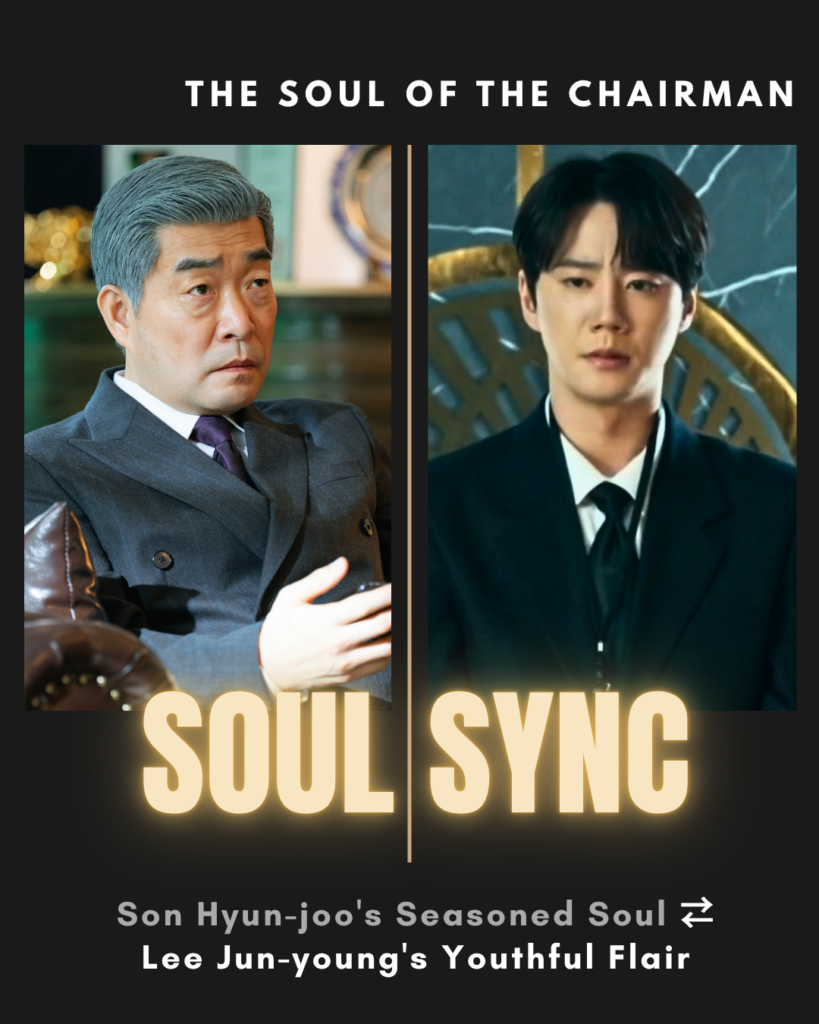
The striking contrast between his youthful appearance and his composed, strategic demeanor adds a strong layer of tension to the narrative. This duality helps maintain immersion as the character navigates both corporate hierarchy and personal identity within the body-swap framework. Combined with the fast-paced storytelling style associated with creator Kim Soon-ok (known for The Penthouse), the series builds momentum through escalating conflicts and high-stakes decision-making, positioning itself as a compelling corporate thriller with strong audience appeal.
If you enjoyed the emotional intensity and atmosphere of this drama, you may also want to revisit its original soundtrack.
The OST captures the tension, character emotions, and corporate atmosphere of the series, making it a great way to relive key moments even after finishing the show.
Original Soundtrack (OST) – Corporate Exorcism: Chairman Kang
In conclusion, Corporate Exorcism: Chairman Kang reframes the body-swap concept into a tightly structured corporate thriller that explores themes of power, identity, and modern corporate dynamics. By grounding its premise in strategic decision-making and institutional conflict rather than fantasy-driven convenience, the series delivers a more realistic and psychologically driven narrative experience.
[Can’t get enough of Lee Jun-young’s incredible performance as the young Chairman Kang?]
If his deep voice, seasoned mannerisms, and insane acting range in this drama made you an instant fan, you need to check out his real-life profile and shocking past roles. From his idol roots to becoming K-drama’s favorite anti-hero, we’ve broken down everything about this acting genius!